For years, defenders of OnlyFans have repeated the same argument that, unlike pornography studios, they say, OnlyFans puts creators in control. There are no producers. No middlemen. No coercive contracts. No exploitation.
Just independent creators making content on their own terms. It’s a comforting narrative, if only it were true.
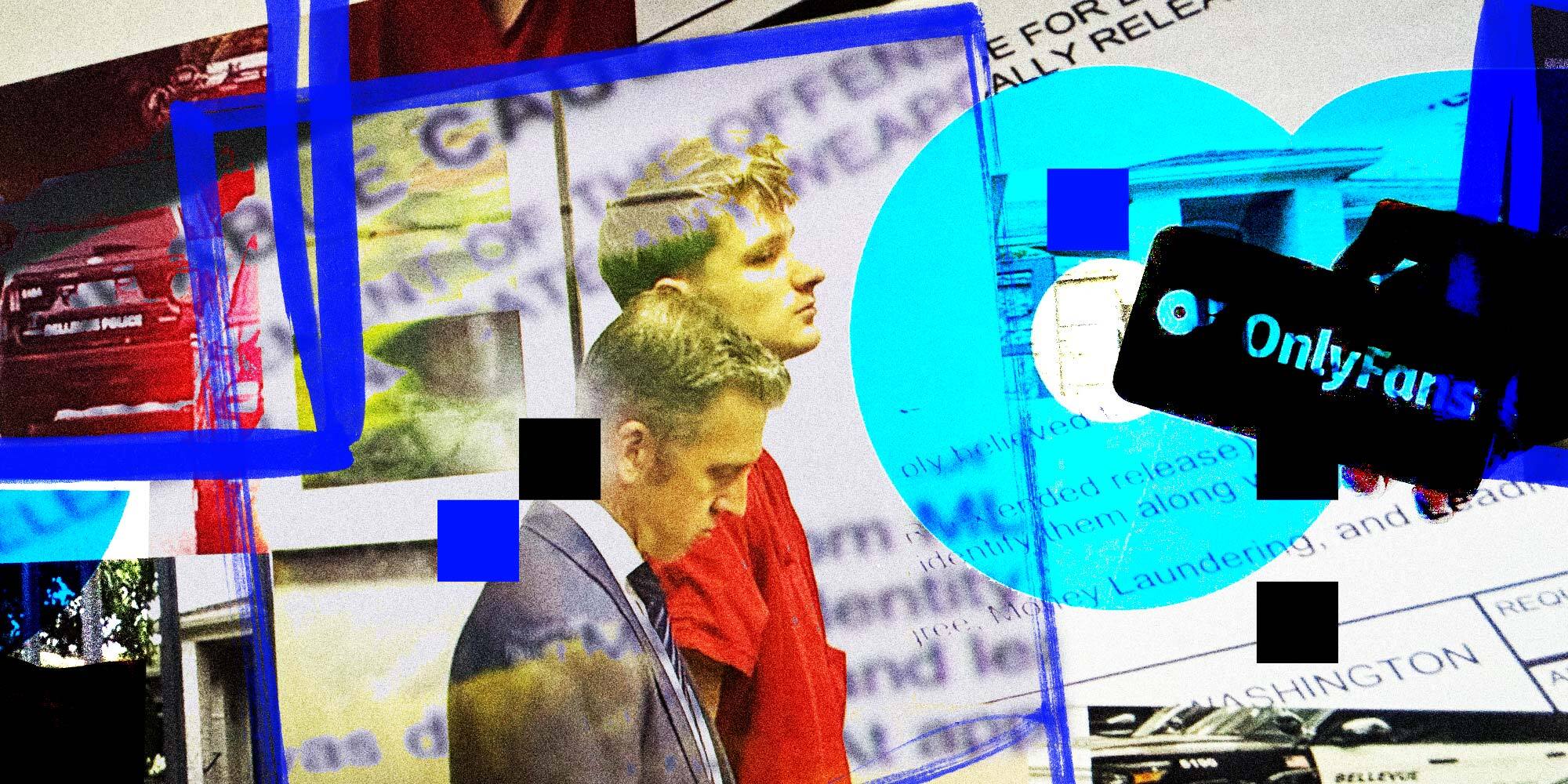
This month, investigators in Bellevue, Washington pulled back the curtain on what police describe as a trafficking operation built around OnlyFans and other adult-content platforms. The allegations read less like the empowering “creator economy” and more like the kind of exploitation many people insist can’t happen on a platform built around individual accounts.
According to court documents, multiple women reported being recruited with promises of wealth, luxury, and financial independence. Instead, they allegedly found themselves trapped in a system of coercion, intimidation, financial control, and violence. Prosecutors have charged 21-year-old Nikita Tyukalo with multiple counts of human trafficking, money laundering, and leading organized crime. He has pleaded not guilty.
The case is still working its way through the courts. But the allegations themselves should destroy the fantasy that a creator platform is somehow immune to trafficking.
Because trafficking doesn’t disappear when the website structure changes, it simply adapts.
The Mansion That Looked Like Success
From the outside, the Bellevue house looked like social media success. Luxury cars, massive parties, influencers, money….
Neighbors reported seeing crowds of hundreds gathering at the property. Some parties reportedly attracted more than 300 attendees. Police say many were promoted online and attended by teenagers and young adults.
The image projected to the outside world was an aspiration. Inside, according to investigators, the reality was something very different.
Multiple women told police they were recruited, some initially at 16 and 17 years old, through promises that they could become wealthy through OnlyFans. One woman said she was told that girls who had once been very poor were now rich, flying on private jets and living lives transformed by online content creation. They were told they had control of the type of content they posted and had the option to only upload swimsuit or fully clothed content, but once they started, they were forced to make pornography.
It’s the same pitch that fuels much of the online adult-content economy: you are not being exploited, you are becoming an entrepreneur.
But according to investigators, many of the women never controlled the businesses that supposedly belonged to them.
“He Changed the Password”
One of the most striking details in the Bellevue case is how frequently control appears in the allegations. Not controlled through chains or locked rooms.
Control through accounts, password management, income restrictions, threats, coercion, and violence.
One woman told investigators she was convinced to create an OnlyFans account, only to have the password changed so she could no longer monitor the money being generated.
Another woman reported that she was unable to access accounts created in her own name. Police say some women were effectively locked out of their earnings while others allegedly watched large sums of money flow through accounts they could not control.
According to court documents, one account reportedly generated nearly $230,000. Yet women told investigators they struggled to access the money or even determine how much had been earned.
This is one of the biggest blind spots in the public conversation around OnlyFans.People assume that because content appears under a woman’s name, she must control it. Fans assume the people they are actually chatting with are the creators themselves.
That assumption can be dangerously wrong. Traffickers do not need to stand on camera. They only need control over the account.
Streaming for 10 to 12 Hours
The allegations become even more disturbing.
One woman told investigators she was forced to livestream on Chaturbate for 10 to 12 hours at a time while the men behind the operation took most of the proceeds.
Another reported earning more than $250,000 in a year through content creation and demanding access to her money, only to be refused.
Several women described a system where leaving wasn’t as simple as walking away. If they left, they allegedly lost access to the accounts that generated their income. The business that was supposedly empowering them had become a mechanism of control.
That is exactly how modern trafficking often works. Too often, we still imagine trafficking as kidnapping. Many trafficking experts have spent years trying to explain that coercion is usually more subtle.
It’s about creating debt, controlling dependency, isolation, threats, controlling finances, opportunities, and reputation.
The Bellevue allegations read like a textbook example.
Violence Behind the Screen
Then there are the allegations of physical abuse.
According to court filings discussed in court proceedings, women reported being strangled, slapped, threatened with guns, spit on, and beaten. One prosecutor described allegations that a woman was made to crawl naked on the floor “like a dog,” with a gun pointed at her head.
One woman reportedly told investigators that she continued complying because she knew what happened to girls who resisted.
“I knew other girls were getting hurt, beaten, and threatened with guns, so I didn’t want to get to that point,” she said, according to court records.
Another victim reported that when she tried to leave all of her belongings except her birth certificate were taken from her donated to Goodwill, and she was dropped off with nothing at a nearby supermarket wearing a t-shirt and shorts.
One woman told a Bellevue detective, “I let them because I was scared, I thought I was going to get killed, to be honest.”
Again, it is worth remembering what was being sold to the public. Fans who subscribe to this content don’t see the threats, the guns, the violence. They pay to see what they think is 100% consensual enthusiastic consent.
The Child Exploitation Problem Nobody Can Solve
The Bellevue case is not only about trafficking.
It also raises another uncomfortable question that OnlyFans defenders rarely answer: How can consumers know who is actually behind the content they are watching? When a user subscribes to an account, they see photos and videos. What they do not see is whether someone else controls the passwords. Whether someone else controls the money. Whether threats occurred off-camera. Whether coercion occurred before filming. Whether the person appearing online genuinely has control over their participation.
That uncertainty becomes even more alarming when minors become involved.
OnlyFans has repeatedly stated that it prohibits minors and uses verification systems. Yet news reports over the years have documented instances where underage users found ways onto platforms, where content moderation failed, or where child sexual abuse material circulated across online sexual-content ecosystems before being detected.
The reality is that no platform can perfectly verify what happened before a camera was turned on. No website can fully see coercion occurring behind closed doors.
No algorithm can reliably detect whether a creator is acting freely or under threat. The viewer sees content. The platform sees uploads. Neither necessarily sees exploitation.
The Dangerous Myth of the “Ethical Platform”
The Bellevue allegations expose a deeper problem. Many people have stopped asking whether exploitation exists. They only ask where it exists.
Traditional pornography? Exploitative. Trafficking rings? Exploitative. OnlyFans? Supposedly different.
But exploitation is not tied to a business model. It is tied to human behavior. A platform cannot eliminate coercion simply by calling participants “creators.”It cannot eliminate trafficking by replacing producers with account managers. It cannot eliminate abuse by processing payments digitally.
The Bellevue allegations illustrate that the same patterns of exploitation can emerge in new forms. According to prosecutors and investigators, women were lured with promises of wealth and success, only to face control over their earnings, psychological manipulation, isolation from support systems, threats, and even violence. The details may look different from traditional trafficking cases, but the underlying dynamics are strikingly familiar. The technology has changed, moving exploitation onto creator platforms and behind digital accounts, but exploitation itself has not disappeared—it has simply adapted.
The Question Every Consumer Should Ask
Supporters often argue that OnlyFans is ethical because consumers know they are directly supporting creators. But the Bellevue case raises a question that should make every subscriber uncomfortable: How do you know? How do you know the person controls the account? How do you know she receives the money? How do you know she wasn’t recruited through fraud?How do you know threats weren’t used? How do you know violence wasn’t involved? How do you know what happened before the camera turned on?
The honest answer is simple.
You don’t.
Most of the time, viewers are making assumptions based on branding. The Bellevue house allegedly sold a fantasy of empowerment, while prosecutors say exploitation was happening behind the scenes.
That doesn’t mean every OnlyFans account involves trafficking. It doesn’t mean every creator is being exploited. But it does destroy the comforting myth that a platform built around individual creators somehow guarantees that exploitation isn’t present.
The Bellevue case is a reminder that trafficking doesn’t disappear when it moves online.
Sometimes it just gets better marketing.